![ECOG-ACRIN logo[19516]275×75](https://blog.ecog-acrin.org/wp-content/uploads/2021/03/ECOG-ACRIN-logo19516275x75.png)


Coming Soon: EA4241/TARGET-HL for Patients With Hodgkin Lymphoma
October 14, 2026From the Co-Chairs, October 2026
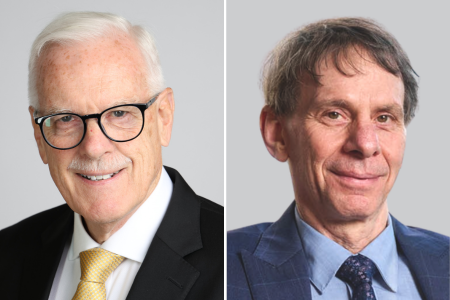
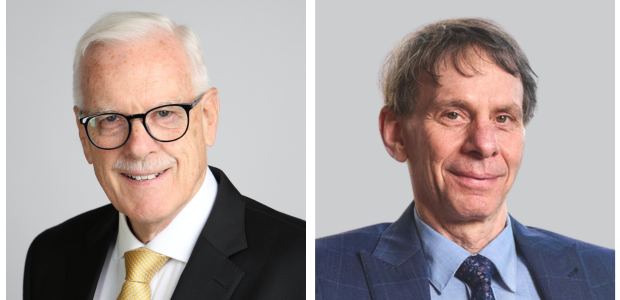
By Peter J. O’Dwyer, MD (left)
and Mitchell D. Schnall, MD, PhD
The new academic season has well and truly begun. The National Cancer Institute’s (NCI) Division of Cancer Prevention (DCP) hosted the NCI Community Oncology Research Program (NCORP) Annual Meeting in Bethesda on September 24–25. After brief welcome remarks by NCI, DCP, and Division of Cancer Control and Population Sciences (DCCPS) leaders, Dr. Brandy Heckman-Stoddard reviewed NCORP activities from the past year. Highlights included substantial accrual accomplishments (including EAQ223, Improving Diversity Participation and Enrollment in Cancer Clinical Trials, ECOG-ACRIN SUPPORT Trial, led by Drs. Melissa Simon and Elyse Park), NCORP growth, and several new initiatives for the future.
Awards included the Harry Hynes Award for Dr. Brian Faller of Heartland Cancer Research NCORP, a much-deserved honor. Presentations of impactful trials included EAQ202, a study of patient-reported outcomes (PRO) data capture in adolescent and young adult (AYA) patients, led by Dr. John Salsman, chair of the ECOG-ACRIN Adolescent and Young Adult Subcommittee. Investigators are currently analyzing the data, but feasibility (82% completion) and data quality were already evident. ECOG-ACRIN lung cancer advocate Jill Feldman served as a keynote speaker and gave a stirring justification for advocate participation in all aspects of clinical trial development, and particularly for the incorporation of PROs to understand the experiences of those receiving therapy. She also emphasized that effective advocate engagement needs to start early in the development of new concepts, and that the value that advocates bring to this process should be recognized with some level of reimbursement.
Finally, a novel component of the NCORP Annual Meeting was a group of break-out sessions, one of which addressed artificial intelligence (AI) and technology. Dr. Umit Topaloglu from the NCI Clinical and Translational Informatics Branch discussed multiple uses of AI in our trials’ ecosystem, from study planning and review to data analysis and close-out. Participants discussed applications of increasing sophistication, and Dr. Topaloglu will be a resource for accelerating uptake. Additional areas of detailed focus included cancer care delivery research, prevention, and PROs—all of which will be discussed at the relevant committee sessions at our upcoming Fall 2026 Group Meeting.
Pre-registration numbers for the Group Meeting in Philadelphia suggest that this may be one of our best-attended meetings. We will kick off with the Comis Translational Science Symposium on Tuesday, October 20. As in the spring, the focus again is on aspects of inflammation that may be translatable to clinical trials of either treatment or prevention in our populations. Investigators with an interest in developing protocols should strongly consider attending, since lessons in one disease may be applicable to research in others. As you know, these symposia feature short talks followed by a panel discussion in which aspects of trial design can be elucidated.
Also not to be missed is the General Session, at which news of Group events/directions are presented along with early reports of some of our most impactful trials. Since we will be in Philadelphia, we thought to highlight the plans and perspectives of the three Comprehensive Cancer Centers, a segment to be introduced by Dr. Margaret Foti, CEO of the American Association of Cancer Research, who has built that organization to encompass basic science, translational and clinical research, and will discuss future endeavors in these areas. The meeting will also feature a reflection on a career in research by Dr. Robert Gray, who recently stepped down after a long and distinguished tenure as Group Statistician, Therapeutics.
Finally, we were surprised and encouraged by an announcement from the US Department of Health and Human Servies (HHS) of an Advanced Research Projects Agency for Health (ARPA-H)-funded project focused on all aspects of clinical trial design, development, implementation, and communication to accelerate progress against cancer. We all know that studies take too long to get to patients, and to fully read out, and we have discussed many proposals with previous NCI directors to change this dynamic. We are excited by a commitment to examine the structures from top to bottom, and to rethink them at a fundamental level for 2026. The press release says it all: “The new Simulation-augmented, Real-time Platform Adaptive Seamless Trials (SURPASS) program, together with three complementary projects ... aims to remove barriers that slow clinical development and help promising treatments reach patients sooner.” Three technical areas will be introduced through SURPASS: a phaseless design engine for faster trials with fewer patients, a continuous inference engine for faster decisions, and an agentic operations layer to reduce time and cost. Additional projects will address trial enrollment, a more responsive data infrastructure, and patient care navigation. We believe that this has the potential to be the most original approach to revamping our system in many years, and we will share additional details as they become available.
Read the October 2026 issue here.
